






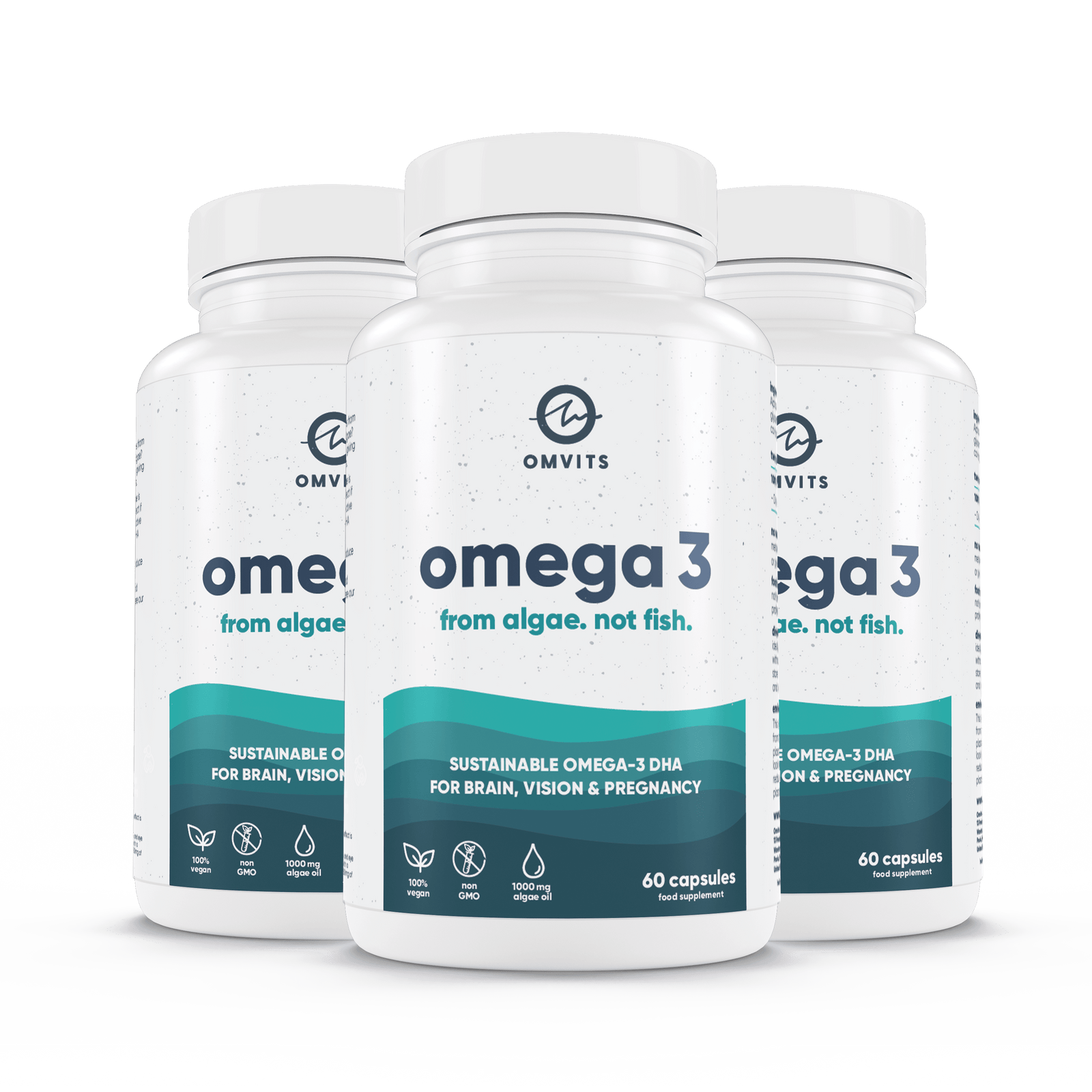

Vegan Omega 3 DHA - Algae Oil Capsules
Choose your routine
Choose your pack size
the 3-month pot works out the best value per capsule
...
.........
product details
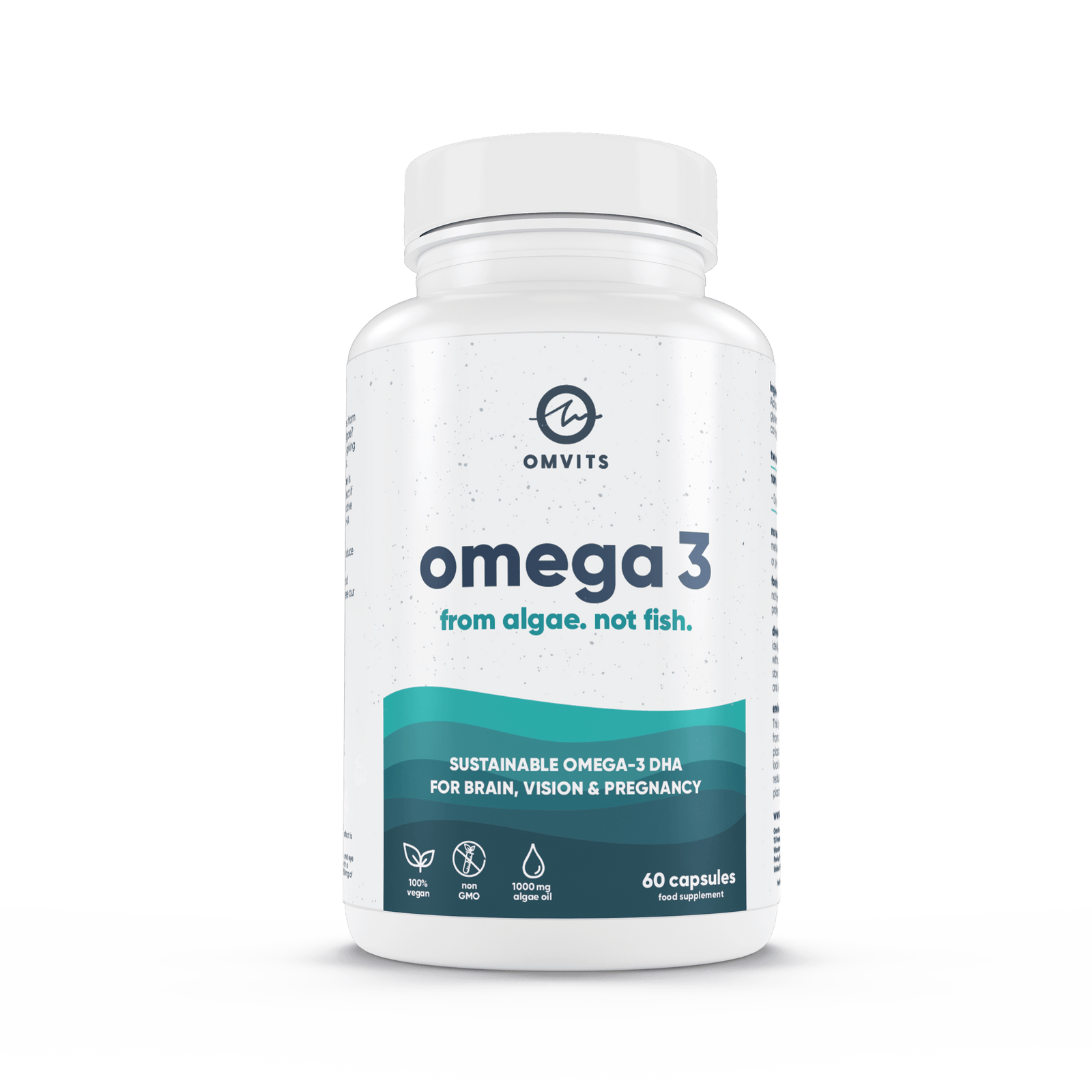
- 200mg DHA per capsule — 400mg per daily 2-capsule dose
- 100% algae-sourced DHA (the omega-3 fish get from the sea), enteric-coated
- Available as 60 capsules (1 month) or 180 capsules (3-month / 90-day supply)
- Suitable for adults, and during pregnancy & breastfeeding
- Vegan Society registered · non-GMO · free from heavy metals
ingredients
Active: 100% vegan algal oil (40% DHA), Vitamin E (dl-Alpha-Tocopheryl Acetate). Softgel Capsule: undegraded carrageenan from red seaweed, modified corn starch (non-GMO), vegetable glycerine, purified water.
What each of these ingredients does: Algal oil: The omega-3 rich oil which is extracted from algae using a solvent-free process.
Modified corn starch, glycerine and carrageenan: These are all plant-based ingredients that help maintain the structure of the capsule and stop it from falling apart, whilst also protecting the oil.
Vitamin E: This is an antioxidant that helps to protect the fatty acids, keep the oil fresh and stop it from going rancid.
directions
Take two softgel capsules per day with a meal. Do not exceed recommended amount without consulting a healthcare professional.
Refrigerate or store in a cool dry place, away from direct sunlight and out of reach of young children.
Caution: food supplements should not be used as a substitute for a varied diet. Always seek professional advice before taking any dietary supplements, particularly if pregnant, breastfeeding or under medical supervision.
health benefits
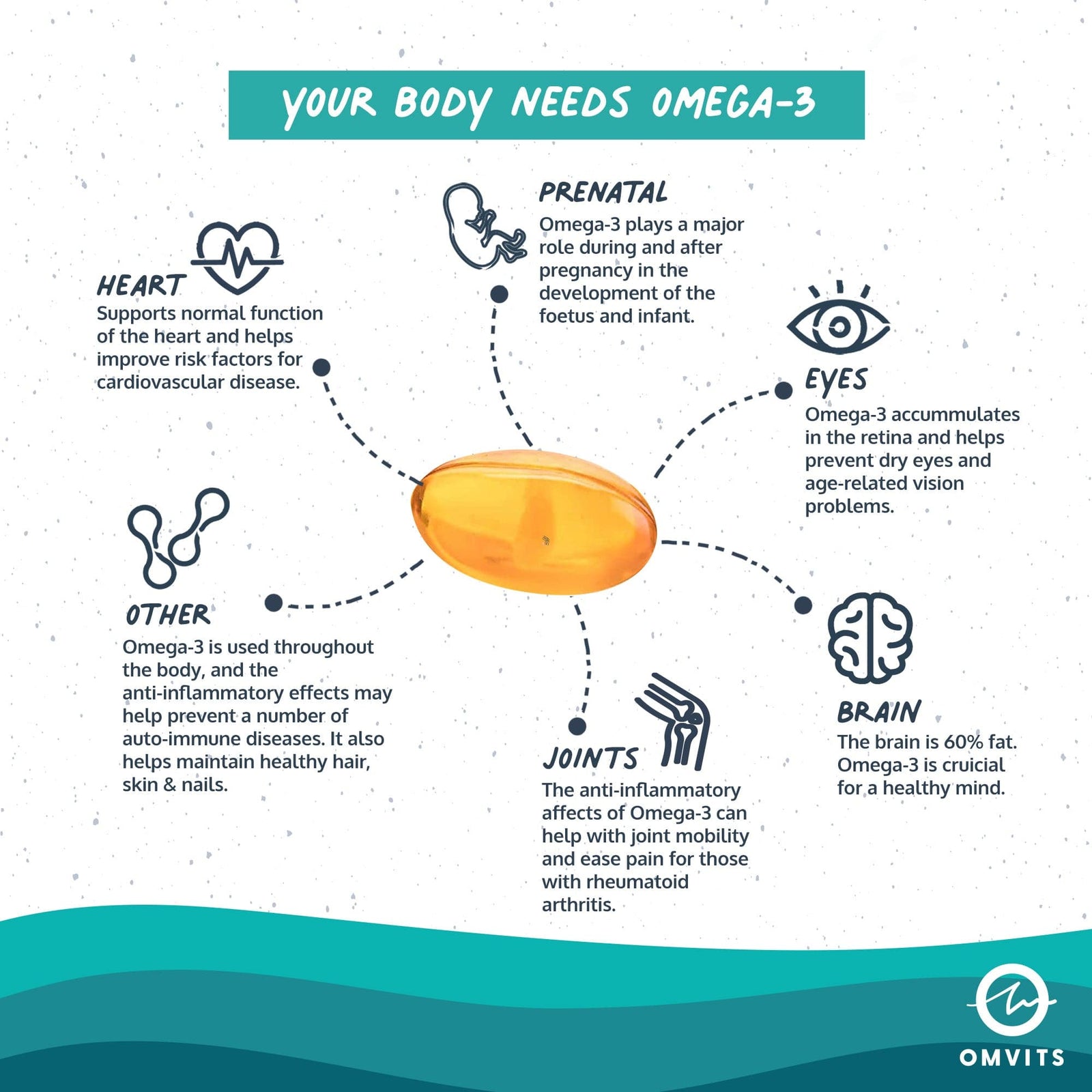
one nutrient, working almost everywhere
DHA is the omega-3 your body uses almost everywhere. Tap an area to explore.

brain
Your brain is close to 60% fat, and DHA is one of the fats it's actually built from.
It's the most abundant omega-3 up there and that structural role is why DHA helps keep your brain working the way it should.
250mg a day supports normal brain function, and a daily dose of our omega-3 gives you 400mg — comfortably more than you need.

eyes
After the brain, the place DHA gathers most is the retina, packed in more densely than almost anywhere else in the body.
It's part of how the eye is built, and it helps keep your vision working normally. 250mg a day supports normal vision, and the same 400mg daily dose covers this too.

pregnancy & baby
A baby's brain is built largely from fat, and DHA is one of the building blocks, which is why it's genuinely worth being deliberate about omega-3 intake in pregnancy and while breastfeeding.
A mum's DHA helps her baby's brain develop normally, before and after birth. That comes with 200mg of DHA on top of your usual daily amount, so a three capsule dose (600mg) covers it — best taken alongside your midwife's or GP's advice.

bones & joints
Omega-3 fats sit inside the membrane of every cell in your body, joints included.
There's evidence to suggest omega-3 plays a role in joint comfort, though it needs further study before anything's conclusive. Learn more about omega-3 and joints →

other potential benefits
Omega-3 shows up in research across a lot of areas — skin, hair, sleep, mood and reducing inflammation. It also helps to balance the omega-6 that our modern diets have too much of.
There's evidence to suggest it plays a part in several of these, though much of it needs further study to be conclusive. Learn more in the full omega-3 guide →
the honest timeline
how omega-3 builds up over time
DHA is a structural fat. Your body builds it in rather than burning it — which takes a cycle.
Days 1–3
Into circulation
DHA reaches your blood within hours. The enteric coating opens the capsule past the stomach — no fishy repeat.
Weeks 2–4
Into your cell membranes
DHA is structural fat, not fuel. Your body builds it into cell membranes rather than burning it off.
Weeks 6–12
Your omega-3 level climbs
Red blood cells carry omega-3 and live about four months, so the level rises across a full cycle.
Months 3–4
A new baseline
At 400mg DHA a day you're well past the 250mg at which DHA helps maintain normal brain function and vision.
-
Days 1–3
Into circulation
DHA reaches your blood within hours. The enteric coating opens the capsule past the stomach — no fishy repeat.
-
Weeks 2–4
Into your cell membranes
DHA is structural fat, not fuel. Your body builds it into cell membranes rather than burning it off.
-
Weeks 6–12
Your omega-3 level climbs
Red blood cells carry omega-3 and live about four months, so the level rises across a full cycle.
-
Months 3–4
A new baseline
At 400mg DHA a day you're well past the 250mg at which DHA helps maintain normal brain function and vision.
fish-free omega-3
from nature's original source
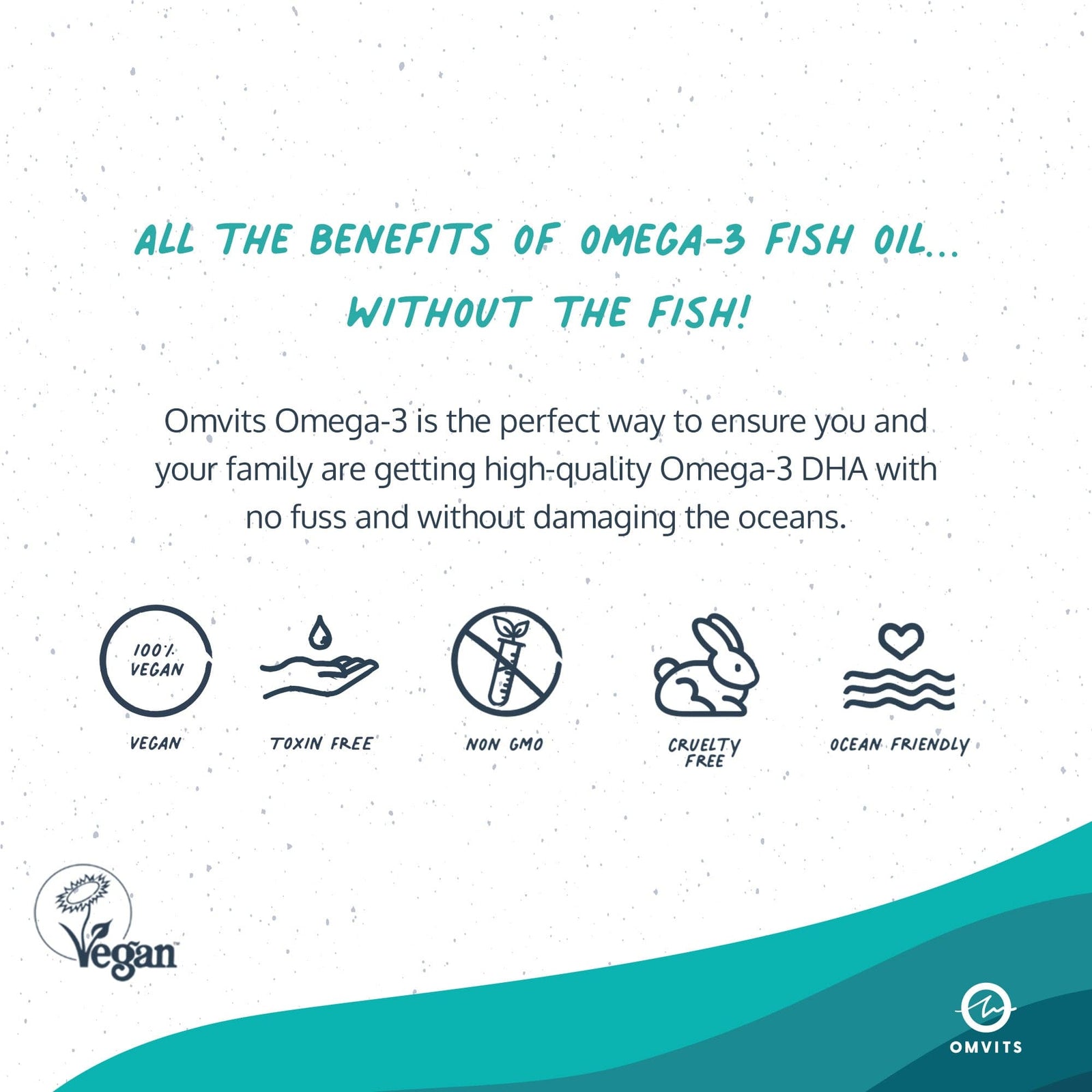
- Suitable for everyone - vegan or not
- No fishy burps or aftertaste
- Sustainable & ocean friendly
- Heavy metal and contaminant free

the comparison
algae oil vs fish oil vs flaxseed oil
| algae oil | fish oil | flaxseed oil | |
|---|---|---|---|
| Source of Omega-3 DHA | |||
| Suitable for vegetarians and vegans | |||
| No fishy burps or aftertaste | |||
| Contaminant and toxin free | |||
| Heavy metal free | |||
| Sustainable & environmentally-friendly | |||
| Suitable for pregnant women |
where it comes from
how algae oil is made
Fish do not make omega-3. It travels up the food chain from the algae that does. We go straight to the original, natural source.
algae oil5steps
- algaeSchizochytrium, grown in purified water
- fermentedfed nutrients medium until the cells fill with oil
- oil extractedharvested, pressed and refined
- blendednatural antioxidants added to keep the oil stable
- omvits omega 3standardised to a consistent DHA dose
fish oil7steps
- algaethe same original source
- eaten by krill and planktonthe first step up the food chain
- eaten by fishalong with heavy metals and contaminants
- caught at sealargely wild catch, at industrial scale
- cooked and pressedsteamed to separate the oil from the solids
- refineddegummed, bleached, deodorised, then distilled
- fish oil capsulescan still contain contaminants and often smells fishy
the bigger picture
25% of the world's entire fish catch goes towards producing omega-3.
The world's oceans can't keep up with the demand for cheap omega-3.
Every year, an estimated 300,000 whales, dolphins and porpoises are caught as bycatch in fishing nets. Algae is farmed rather than fished, so it doesn't have that problem.
learn morepound for pound, algae contains around twenty times the omega-3 of fish.

frequently asked questions
Please contact our Customer Support Team at hello@omvits.com for more information!
Omega-3 DHA
Delivery & Returns
Subscriptions
What are the benefits of Omega-3?
I'm not vegan or vegetarian. Is Omvits Omega-3 right for me?
Plenty of our customers aren't vegan. If you care about where your fish oil comes from, algae is worth considering regardless of diet.
The commercial fishing industry takes a significant toll on ocean health, and the global demand for omega-3 is only growing. Algae is farmed rather than fished, so it doesn't have that problem.
Whether you're vegetarian, vegan, or neither, the case for algae is the same.
Does Omvits Omega-3 contain EPA?
How do I know Omvits Omega-3 is safe to consume?
Is Omvits Omega-3 suitable for children?
Is Omvits Omega-3 safe to use during pregnancy?
How is Omvits Omega-3 different to other sources of plant-based omega-3?
Does Omvits Omega-3 contain Omega-6?
Who can benefit from Omega-3 supplementation?
How do I take Omvits Omega-3?
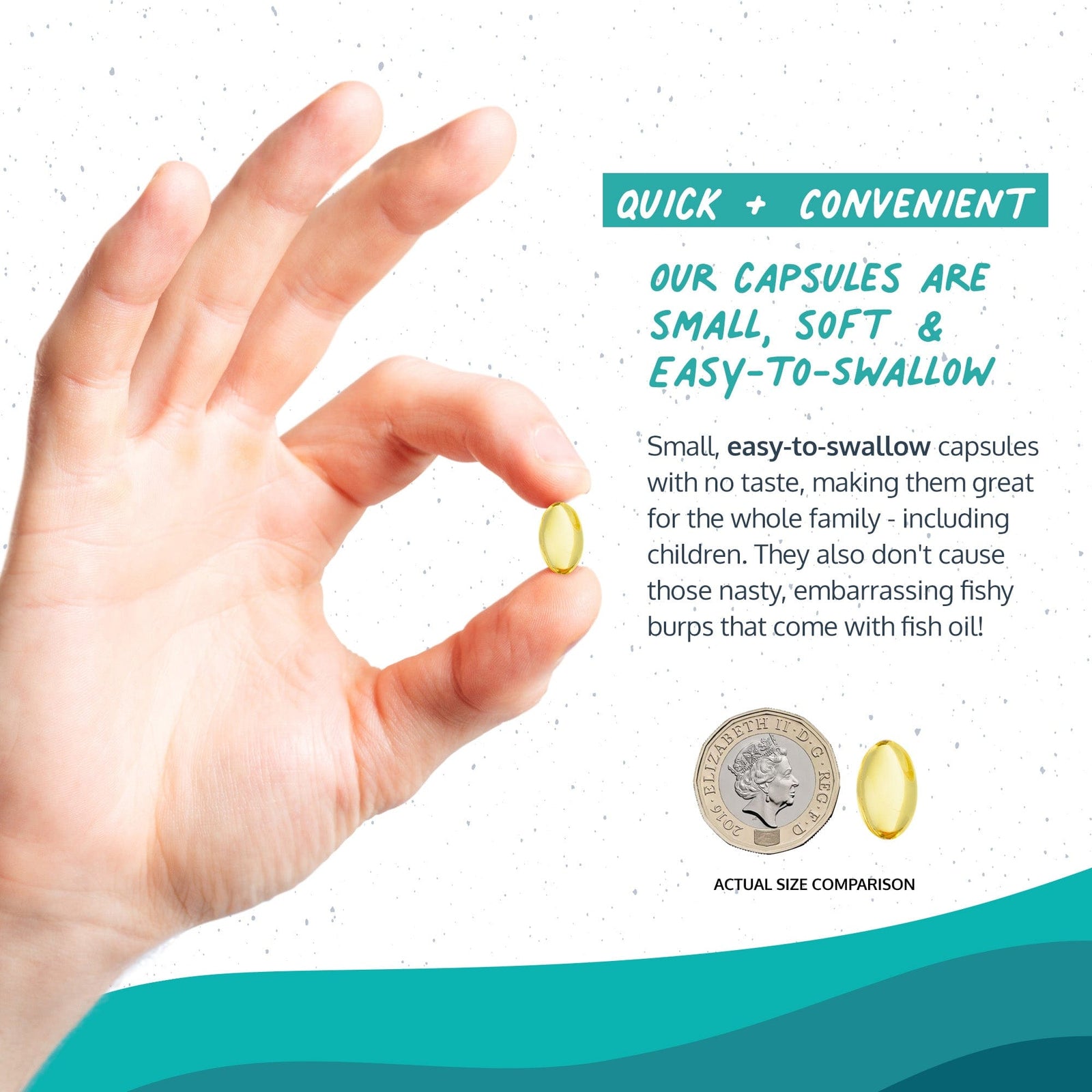
Our Omega-3 softgels capsules should be swallowed whole with water and after a meal (ideally your fattiest meal of the day).
You can also pierce the capsules and squeeze the oil out if administering to young children.
Does Omvits Omega-3 contain Omega-6?
No this does not contain Omega-6. Although Omega-6 is an important fatty acid, the modern diet is very rich in Omega-6. In fact, most people consume far too much, to the point that it is affecting our health.
The ideal ratio of Omega 3 to 6 in the diet is 1:1, while is reality it is closer to 1:20 in the western world.
For this reason, we did not include any Omega-6 in our products as there is little health benefit to supplementing with it.
In most cases, it's far better to increase your Omega-3 and reduce your Omega-6.
Is Omvits Omega-3 allergen free?
Our Omega-3 is free of the most common allergens including fish, wheat, gluten, crustaceans, eggs, nuts, soya, dairy and artificial flavourings and preservatives.
Who can benefit from Omega-3 supplementation?
Omvits Omega-3 may be particularly beneficial for:
- Vegetarians, vegans or anyone with very little oily fish in their diet
- People concerned about the sustainability issues around fishing
- Pregnant and breastfeeding women
- People over the age of 50 who are at higher risk of cardiovascular disease, cognitive and visual decline or joint pain
- People with seafood allergies
- People who suffer from dry eyes
- People wanting to improve their concentration levels and memory
- Young children
- People wanting to improve the health of hair, skin and nails
I use an Omega 3-6-9 supplement. Isn't that better value that Omega-3 alone?
You may think that a supplement which contains Omega 6 and 9 as well as Omega-3 is a better choice than Omega-3 on its own.
However, most of us already get plenty of Omega-6 from the foods we eat. In fact, we are eating so much Omega-6, that it is having a negative effect on our health by causing inflammation.
By taking a supplement with added Omega-6, you could be damaging your health further. As for Omega-9, this is not required in our diet at all. Omega-9 is a “non-essential” fatty acid, as it can be created by the body from other nutrients.
What most people actually need is more Omega-3, not more 6 or 9.
How is your algae extracted? Is there any use of Hexane or any other solvents in the extraction process?
Schizochytrium is a strain of algae found in coastal marine habitats and is naturally rich in Omega-3 DHA.
These algae are cultivated in a sterilised environment and then fermented in vats of purified water.
This keeps the algae free of sea water pollutants and avoids disrupting the marine ecosystem.
During this process, the algae synthesise the DHA-rich oil which is then extracted using a solvent-free process.
The extracted oil is then treated and mixed with Vitamins E and C to prevent oxidation, after which it is ready to be filled into our veggie softgels.
Obviously, there's a lot more to the process, but this provides a basic overview.
What is the Recommended Daily Allowance (RDA) for Omega-3?
There is no official standard for how much Omega-3 we should get each day. However, most health organisations agree that 250–500 mg per day is sufficient to maintain good overall health.
One such organisation is the European Food Safety Authority (EFSA), who recommend the following:
Adults:
- 250 mg DHA or EPA per day for normal adults
Pregnant/breastfeeding women:
- 200 mg DHA per day in addition to normal adult requirements (450 mg total).
Children (7-24 months):
- 100 mg DHA per day
Children (2-18 years):
- 250 mg DHA or EPA per day
Why is Omvits Omega-3 better than fish oil?
There is no doubt that fish oil has some health benefits, however, there are also well documented downsides. If you are considering buying a fish oil, here are a few things to bear in mind:
1) Many fish oils are cheap, but you should be aware of what you are paying for. These cheap fish oils are regularly of poor quality and contain relatively small dosages of DHA/EPA. They often have not been properly processed to remove heavy metals and toxins. You'll also find that they have a very strong "fishy" smell or taste. This is because the oil is starting to go rancid as the polyunsaturated fats start to go bad.
2) If you saw how fish oil is made, you probably wouldn't want to put it in your body! Fish scraps are mashed, steamed and squeezed to get the oil out before it goes through further processing.
3) Our seas are more polluted now than they have ever been. Fish often contain harmful levels of contaminants and toxins including heavy metals, PCBs and dioxins. High levels of these substances in your diet can have serious health consequences, particularly for pregnant women.
4) There are major concerns about the impact of overfishing on world fish stocks. According to the United Nations, world fish stocks are expected to collapse by the year 2048 if current practices continue. Algae on the other hand, is fully sustainable and a great alternative to fish oil for vegans and non-vegans alike.
5) Fish is a highly inefficient way of getting Omega-3 in comparison to algae. Pound-for-pound, algae contains approximately twenty times the amount of Omega-3 as fish. In other words, for every 20 kilograms of fish taken out of the ocean, you'd only need 1 kilogram of algae to produce the same amount of Omega-3!
How do I know this algae is free from Mercury and other heavy metals which also contaminate fish?
Our algae is grown in a closed system in purified water, not taken from the sea.
That means it's free of ocean-borne contaminants, and it doesn't disrupt the marine ecosystem either.
I have a question which is not listed here. How can I get in touch?
If you have a question, we'd love to hear from you! You can contact us by clicking here.
Alternatively, you can email us at hello@omvits.com
I placed an order where is it?
UK orders are typically delivered within 2–4 working days.
You will receive a tracking link once your order has been dispatched so you can follow your delivery.
Do you offer free delivery?
Yes. Free UK delivery is included on all orders over £25.
Shipping costs for other orders are calculated at checkout.
Do you ship internationally?
Yes, however delivery charges and duties may apply.
Can I return my order?
Every order is protected by our 100-Day Happiness Guarantee.
If you’re not satisfied for any reason, simply contact our support team within 100 days of receiving your order and return the remaining product. Once your return is received and inspected, we’ll issue a refund to your original payment method.
If your order included free gifts or promotional items, these should also be returned. If promotional items are not returned, their value may be deducted from the refund amount.
Please refer to our return policy for more information.
How does the subscription work?
When you choose a subscription, your order is delivered automatically at the frequency you choose, so you never run out.
Subscription orders save you money on every delivery.
We'll contact you a few days before each dispatch to give you time to make any adjustments.
Can I cancel my subscription?
Yes. You can cancel your subscription at any time through your customer account.
There are no long-term commitments.
Can I skip a delivery?
Yes. If you still have product remaining, you can skip or delay your next delivery directly from your account dashboard.
When will I be charged?
You will only be charged when your next delivery is scheduled to ship.
You will receive a reminder email before your subscription renews.
Can I change my delivery frequency?
Yes. You can update your delivery schedule at any time from your account settings.
Start your routine today
 100-day Happiness Guarantee
 100-day Happiness Guarantee
