


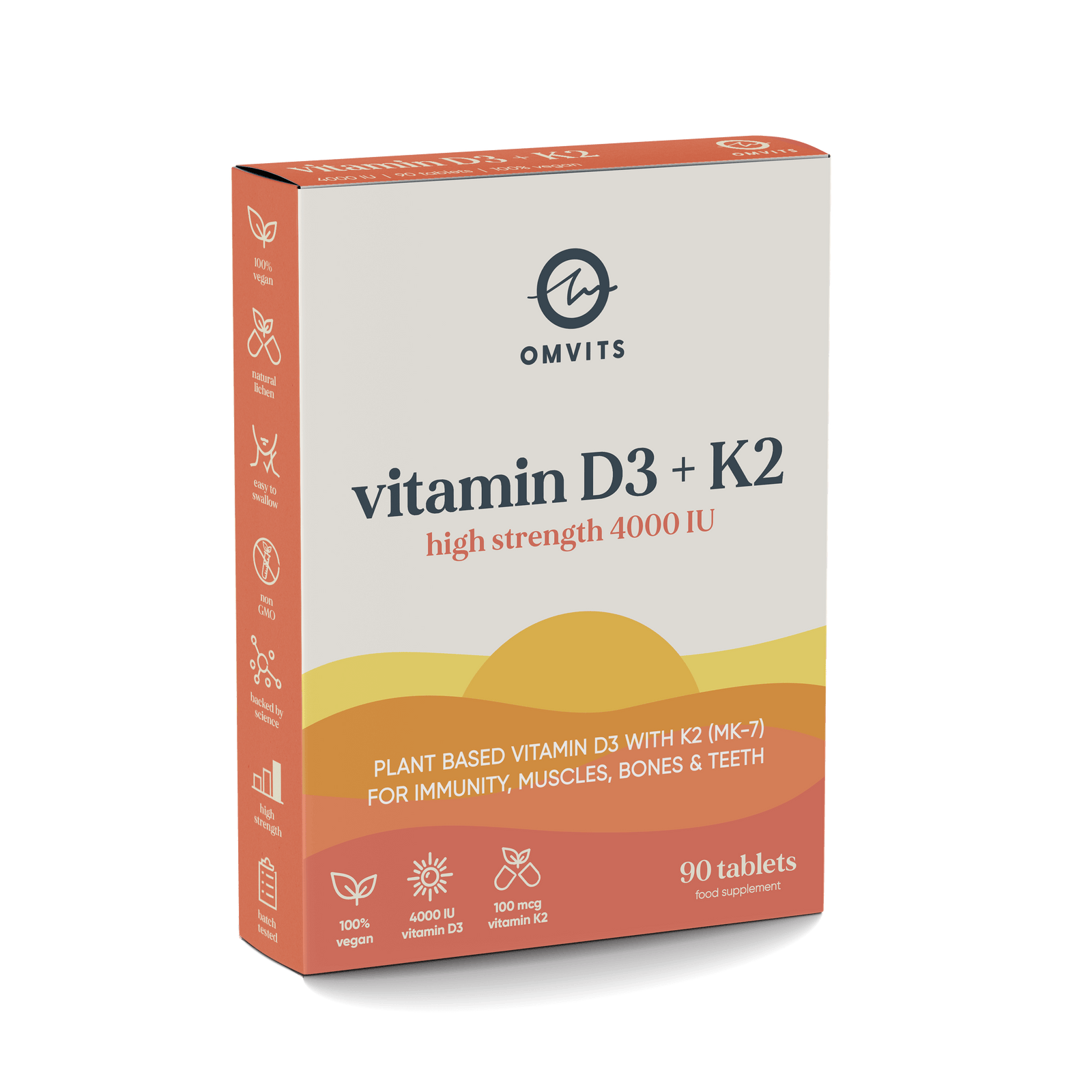









Vegan Vitamin D3+K2 - 90 Tablets
Choose your pack size
...
.........
product details
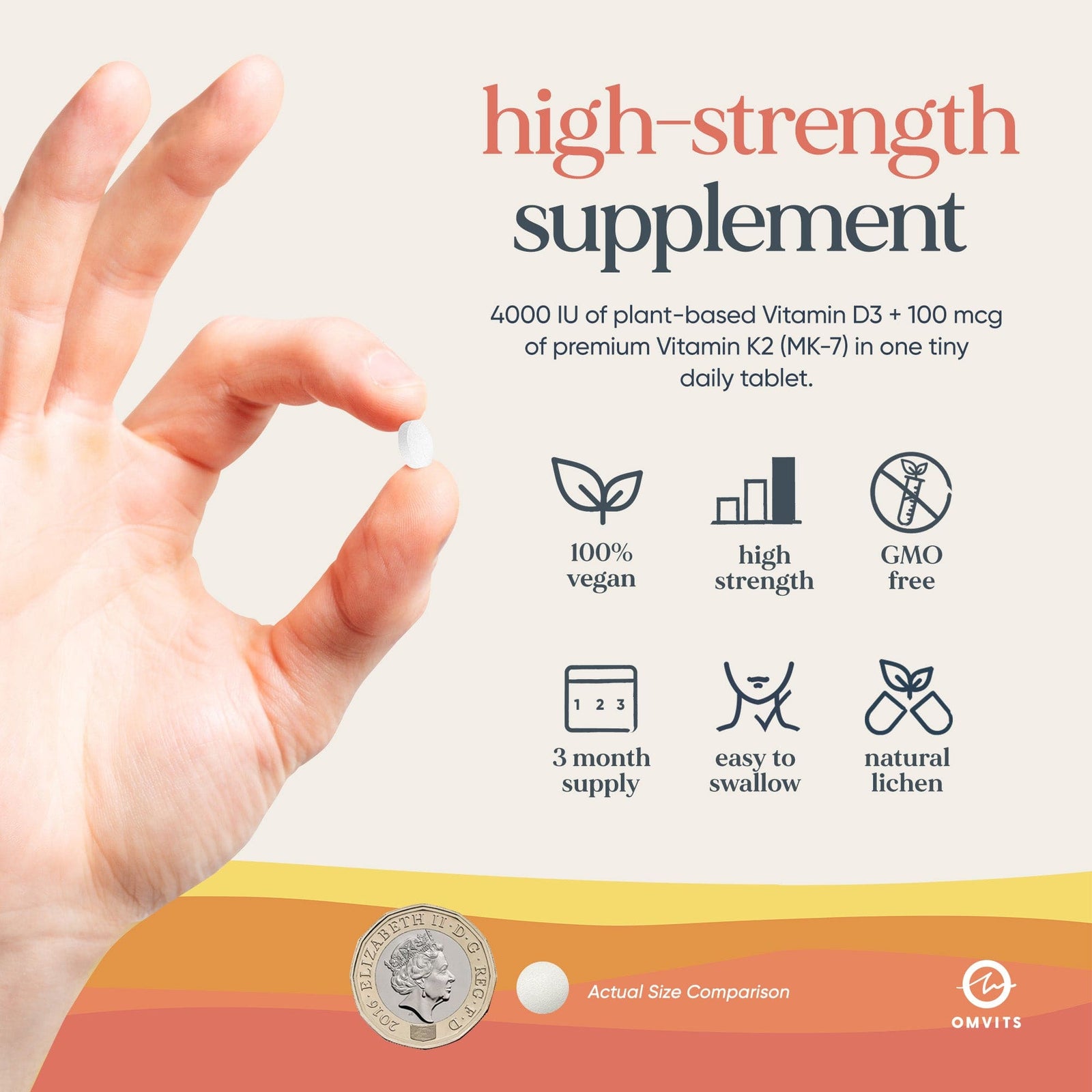
- 90 easy-to-swallow tablets
- 4000 IU (50 micrograms) D3 and 100mcg K2 per tablet
- 3-month supply
- GMO-free
- Recyclable packaging
ingredients
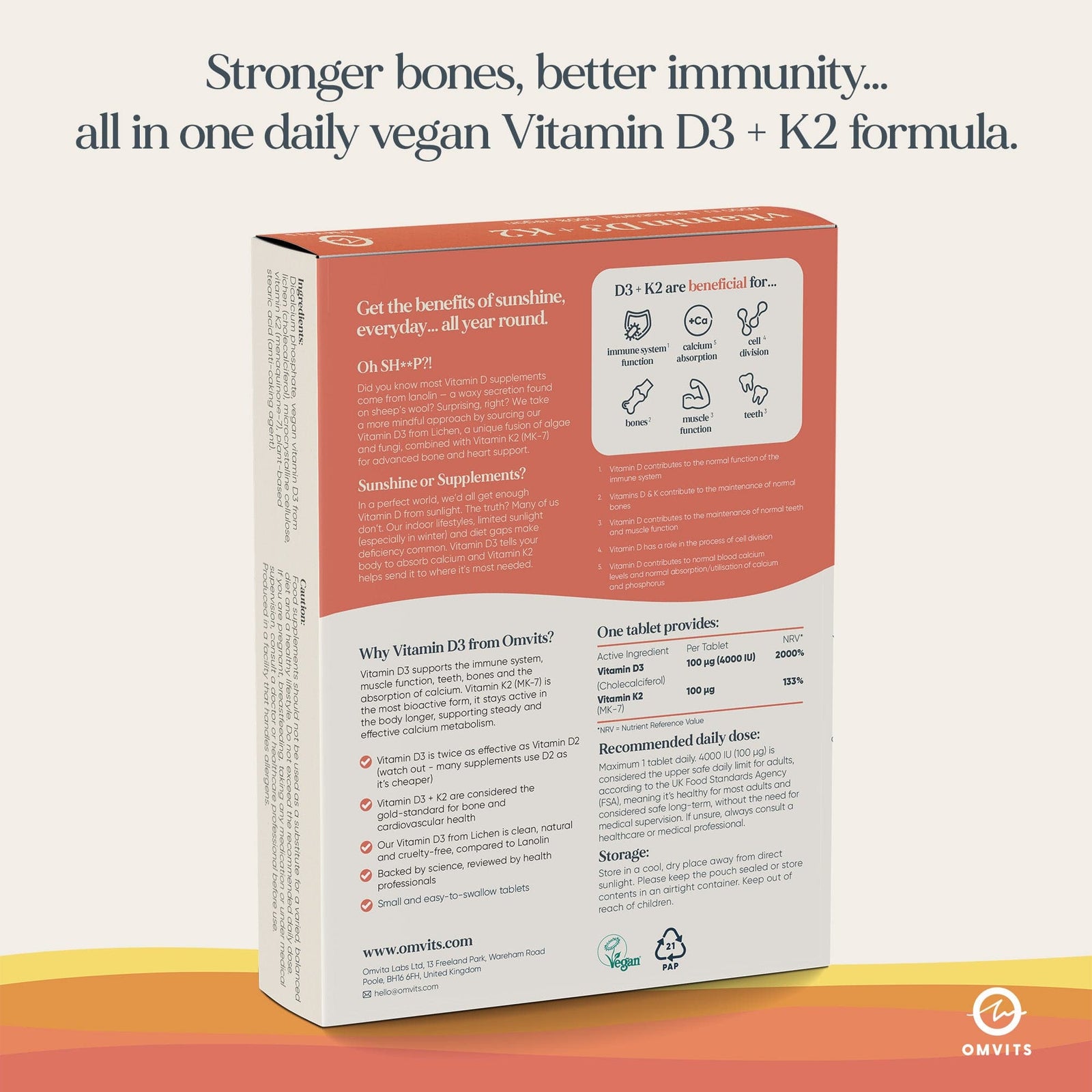
Dicalcium phosphate, vegan vitamin D3 from lichen (cholecalciferol), microcrystalline cellulose, vitamin K2 (menaquinone-7), plant-based stearic acid (anti-caking agent).
directions
Take one tablet daily with water, preferably with a meal, or as directed by your doctor.
Maximum 1 tablet daily. 4000 IU (100 µg) is considered the upper safe daily limit for adults, according to the UK Food Standards Agency (FSA), meaning it’s healthy for most adults and considered safe long-term, without the need for medical supervision. If unsure, always consult a healthcare or medical professional.
Store in a cool dry place, away from moisture, direct sunlight and out of reach of young children.
Caution: food supplements should not be used as a substitute for a varied diet. Always seek professional advice before taking any dietary supplements, particularly if pregnant, breastfeeding or under medical supervision. Not intended for use by persons under the age of 18 years.
health benefits
D3 and K2 work as a team.
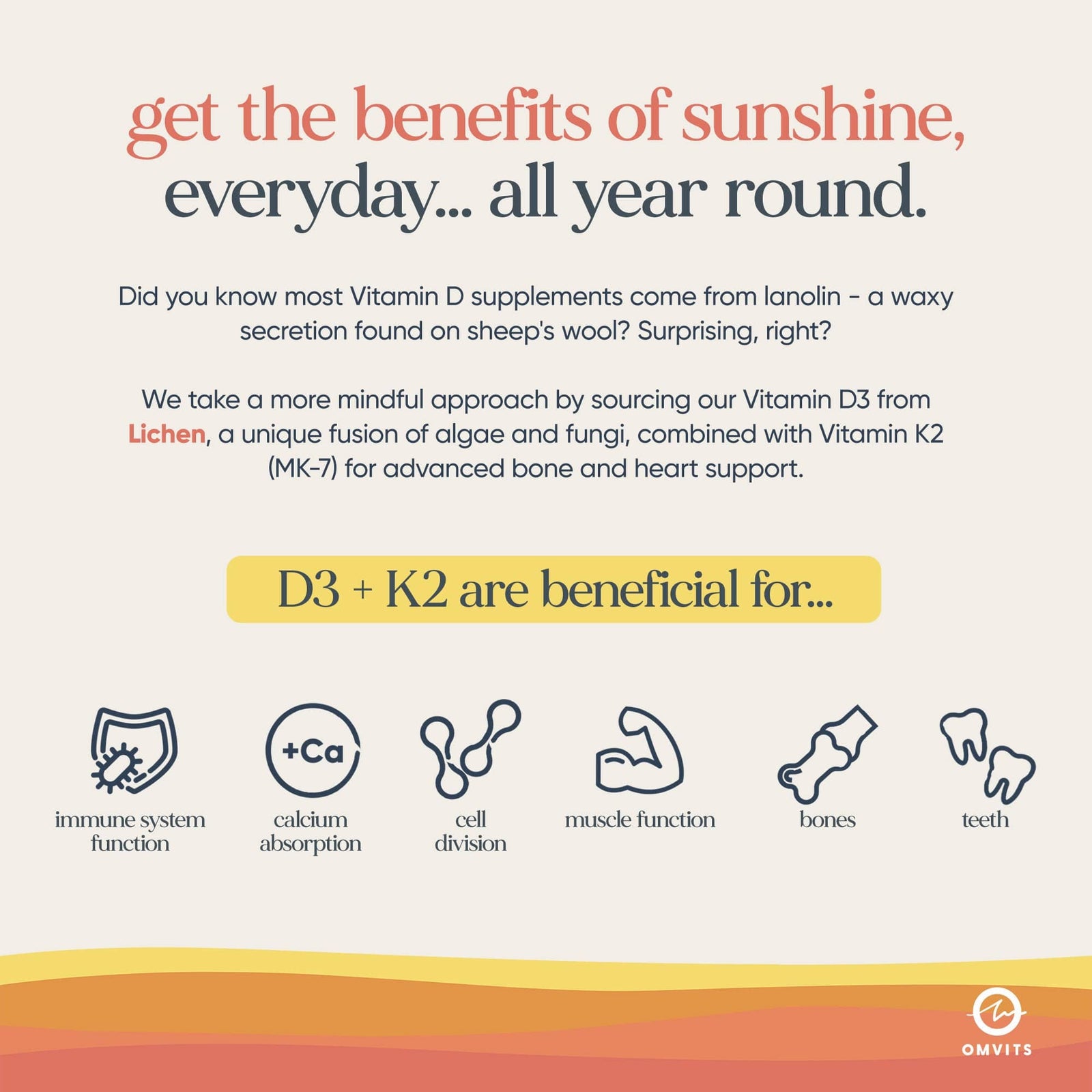
Vitamin D and K2 work as a team. D3 helps you absorb calcium efficiently, while K2 directs it to your bones instead of your arteries. Tap an area to explore.

immune system
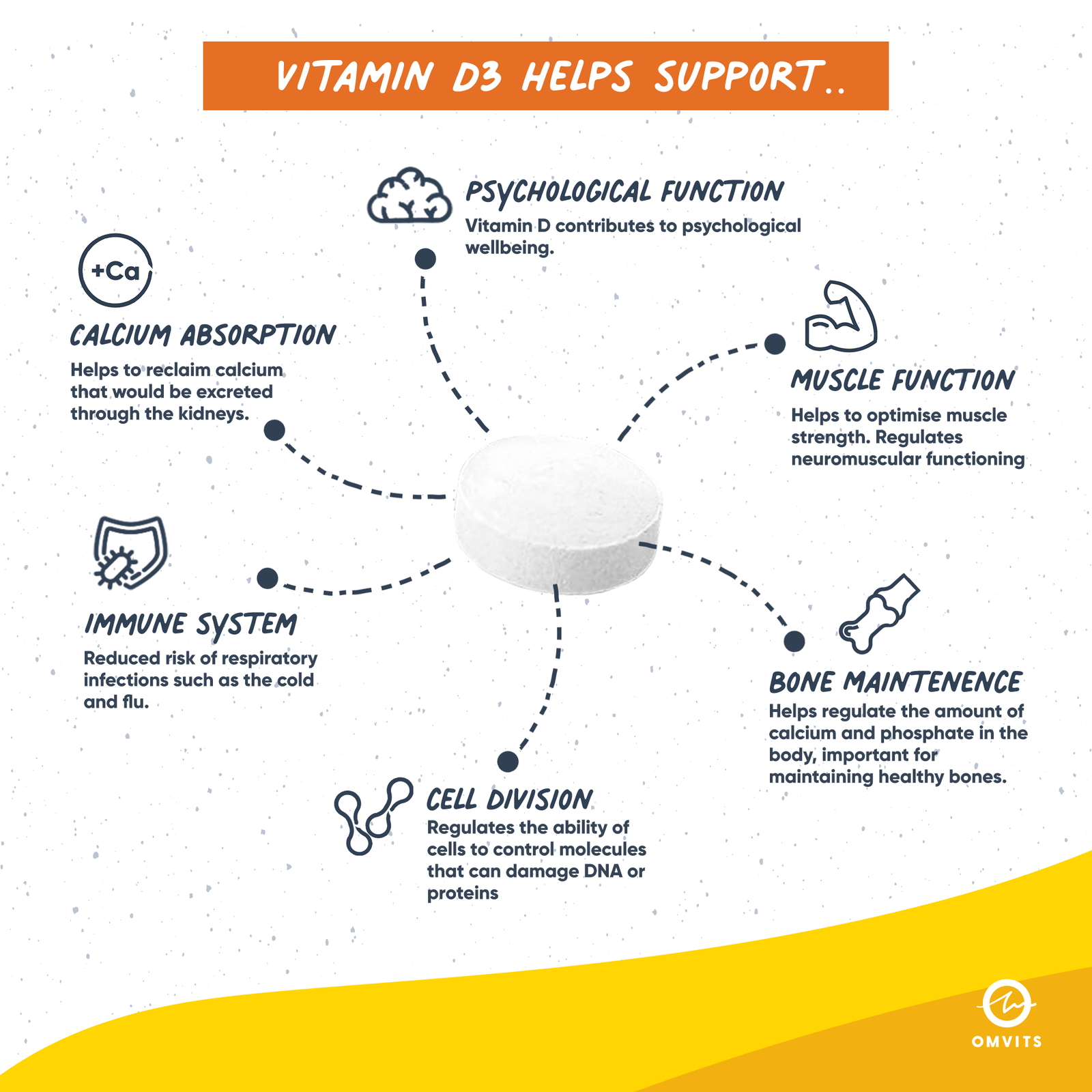
Vitamin D contributes to the normal function of the immune system:
- Reduced risk of respiratory infections such as the cold and flu
- Early research suggests a correlation between vitamin D and a reduced risk of the body developing certain types of cancer
- Helps activate the body's natural response to fight disease
- May help fight development of autoimmune diseases

calcium absorption
Vitamin D contributes to normal absorption/utilisation of calcium and normal blood calcium levels. Vitamin K contributes to the maintenance of normal bones.
- Helps to absorb calcium in the intestines
- Helps to reclaim calcium that would otherwise be lost through the kidneys
- Vitamin K2 helps activate osteocalcin, a protein that binds calcium to the bone matrix
- Together, Vitamin D3 and K2 support efficient calcium use — ensuring it goes to bones and not soft tissues
- Plays a role in the mineralisation of bone
- Maintenance of blood calcium levels within a narrow range is vital for normal functioning of all cells in the body, including the nervous system, as well as for bone growth and maintenance of bone density

muscles
Vitamin D contributes to the maintenance of normal muscle function.
- Helps to optimise muscle strength
- Regulates neuromuscular functioning
- Impacts protein synthesis
- Deficiency may increase risk of muscle wasting

bones & teeth
Vitamin D contributes to the maintenance of normal bones and teeth. Vitamin K contributes to the maintenance of normal bones.
- Helps regulate the amount of calcium and phosphate in the body, important for maintaining healthy bones
- Vitamin K2 activates bone-building proteins that support long-term bone strength
- The D3 + K2 combination helps ensure calcium is properly used to maintain strong bones and teeth
- Increases level of calcium absorption in the body
- Deficiency can lead to bone deformities such as rickets in children
- Deficiency can cause bone pain and bone abnormalities such as soft bones (osteomalacia) or fragile bones (osteoporosis)
- Deficiency may increase the risk of underdeveloped teeth, tooth decay and gum disease

cell division
Vitamin D plays a role in the process of cell division.
- Plays a major role in the life cycle of human cells
- Regulates the ability of cells to control molecules that can damage DNA or proteins

brain
Vitamin D contributes to psychological wellbeing:
- Studies have shown a link between Vitamin D deficiency and the development of seasonal affective disorder (SAD)/seasonal depression
- Plays a role in regulating mood
the honest timeline
what to expect from a daily vitamin D
Vitamin D is a level, not a dose. Here's how that level builds and where it settles.
Days 1–14
Building a level, not a hit
Vitamin D is stored in body fat and released slowly. You're raising a level, not dosing for the day.
Weeks 3–6
Your level climbs
Blood vitamin D rises steadily through the first weeks. D contributes to normal immune function and normal muscle function.
Weeks 8–12
It reaches a plateau
Most people level off somewhere here, where daily intake and daily use balance out. That plateau is the point.
Months 3+
The slow structural work
D3 contributes to normal calcium absorption. D and K2 both help maintain normal bones — a process measured in years.
-
Days 1–14
Building a level, not a hit
Vitamin D is stored in body fat and released slowly. You're raising a level, not dosing for the day.
-
Weeks 3–6
Your level climbs
Blood vitamin D rises steadily through the first weeks. D contributes to normal immune function and normal muscle function.
-
Weeks 8–12
It reaches a plateau
Most people level off somewhere here, where daily intake and daily use balance out. That plateau is the point.
-
Months 3+
The slow structural work
D3 contributes to normal calcium absorption. D and K2 both help maintain normal bones — a process measured in years.
from lichen. not from sheep's wool.
The only plant-based source of D3
- Have mostly indoor lifestyles
- Live in countries without year-round sunshine
- Wear sunscreen in the summer
- Have darker skin
- Wear long-sleeved clothes when outdoors
- Can't get direct sunlight daily between 10am and 2pm

frequently asked questions
Please contact our Customer Support Team at hello@omvits.com for more information!
Vitamin D3
Delivery & Returns
Subscriptions
Why combine Vitamin D3 with Vitamin K2?
What is the difference between Vitamin K2 MK-7 and other forms of Vitamin K?
Why do these contain 10 times the UK RDA of Vitamin D? Is it safe?
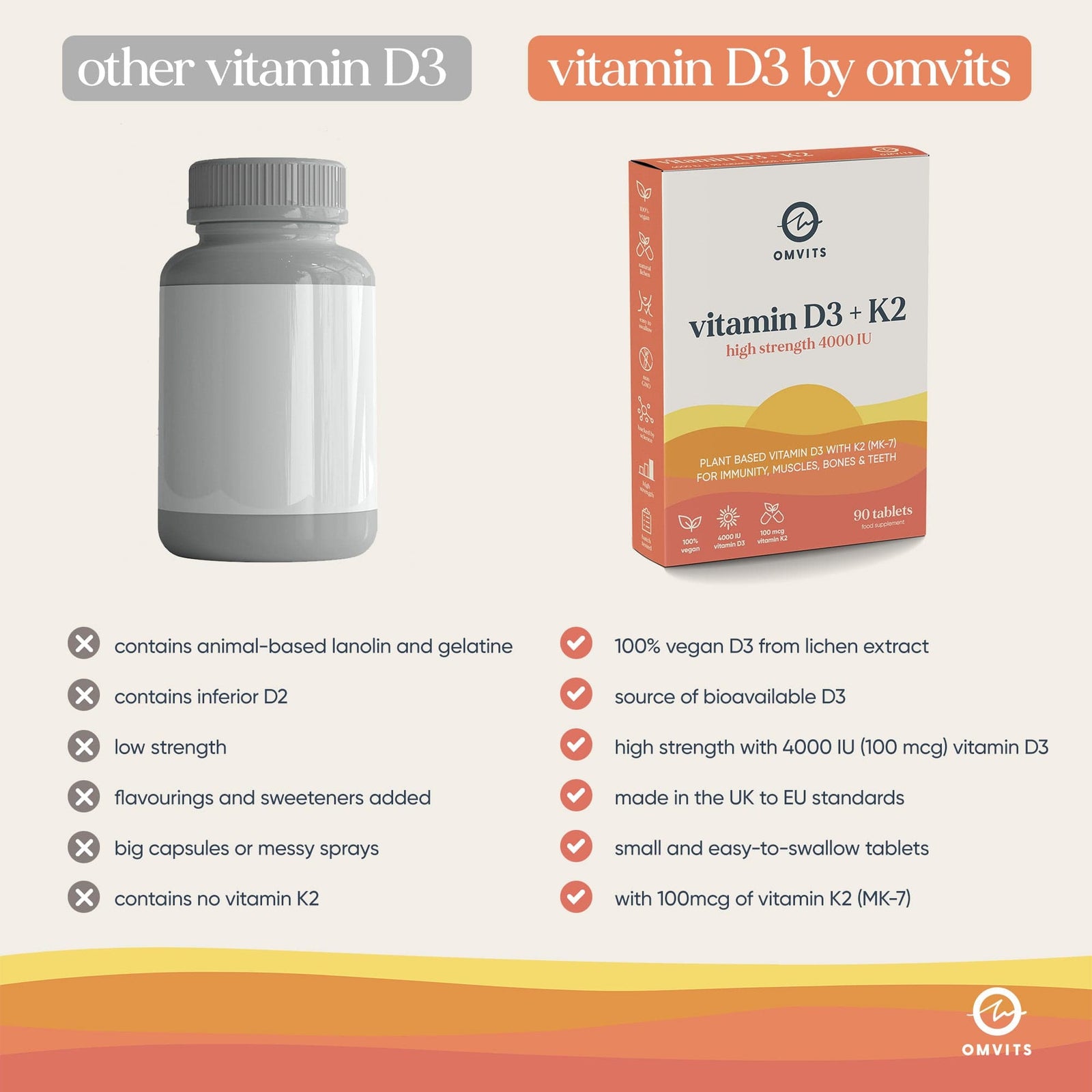
Why is Omvits Vitamin D3 better than the Vitamin D I can get at the supermarket?
Are these suitable for children?
Can I take this alongside a multivitamin?
Can pregnant or breastfeeding women take Vitamin D3 + K2?
When is the best time of day to take D3 + K2?
How long does it take to feel the benefits?
Can I take this product year-round?
I placed an order where is it?
UK orders are typically delivered within 2–4 working days.
You will receive a tracking link once your order has been dispatched so you can follow your delivery.
Do you offer free delivery?
Yes. Free UK delivery is included on all orders over £25.
Shipping costs for other orders are calculated at checkout.
Do you ship internationally?
Yes, however delivery charges and duties may apply.
Can I return my order?
Every order is protected by our 100-Day Happiness Guarantee.
If you’re not satisfied for any reason, simply contact our support team within 100 days of receiving your order and return the remaining product. Once your return is received and inspected, we’ll issue a refund to your original payment method.
If your order included free gifts or promotional items, these should also be returned. If promotional items are not returned, their value may be deducted from the refund amount.
Please refer to our return policy for more information.
How does the subscription work?
When you choose a subscription, your order is delivered automatically at the frequency you choose, so you never run out.
Subscription orders save you money on every delivery.
We'll contact you a few days before each dispatch to give you time to make any adjustments.
Can I cancel my subscription?
Yes. You can cancel your subscription at any time through your customer account.
There are no long-term commitments.
Can I skip a delivery?
Yes. If you still have product remaining, you can skip or delay your next delivery directly from your account dashboard.
When will I be charged?
You will only be charged when your next delivery is scheduled to ship.
You will receive a reminder email before your subscription renews.
Can I change my delivery frequency?
Yes. You can update your delivery schedule at any time from your account settings.
Start your routine today
 100-day Happiness Guarantee
 100-day Happiness Guarantee
